
Tremor Study
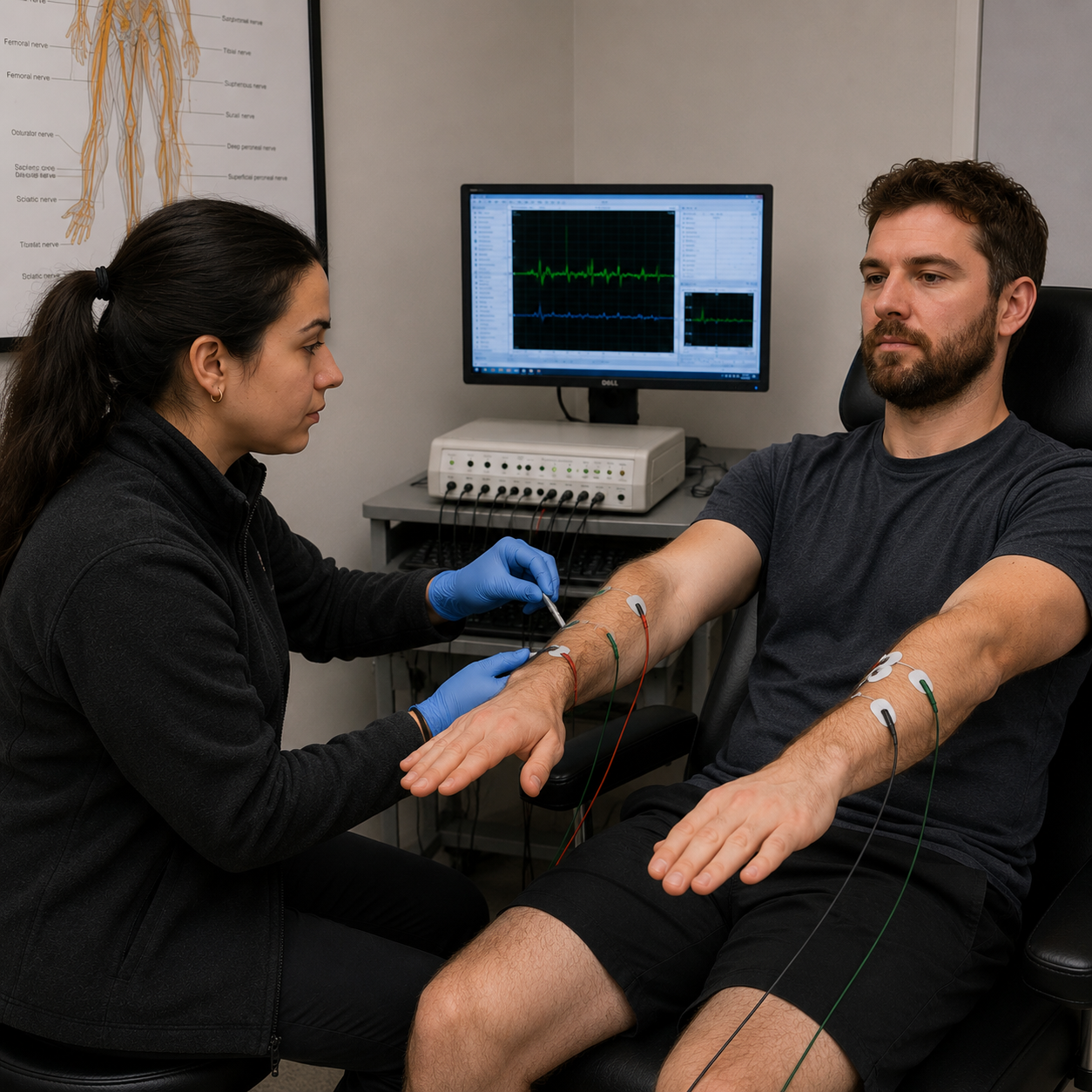
A tremor is an involuntary rhythmic shaking movement that can affect different parts of the body, most commonly the hands, arms, legs, head, or voice. Tremors may occur at rest, during certain movements, or when maintaining specific postures, and can have a variety of underlying causes.
A tremor study is a specialised neurophysiology test that assesses these movements in different positions and activities to help identify the type and possible cause of the tremor. During the examination, small sticker electrodes are placed on the skin to record the electrical signals produced by muscle contractions. Your arms and/or legs will be assessed in a variety of postures and movement tasks while the muscle activity is recorded.
Unlike some other neurophysiology tests, there is no electrical stimulation used during a tremor study.
Once the recording is completed, the data is analysed using specialised mathematical calculations, including Fast Fourier Transform (FFT) analysis, to determine the peak tremor frequency and movement characteristics. This analysis is performed after the appointment, so results are not available immediately.
The information obtained from the study helps the neurologist classify the tremor type and can assist in guiding diagnosis, treatment, and management options.