
Nerve Conduction Study (NCS/EMG)
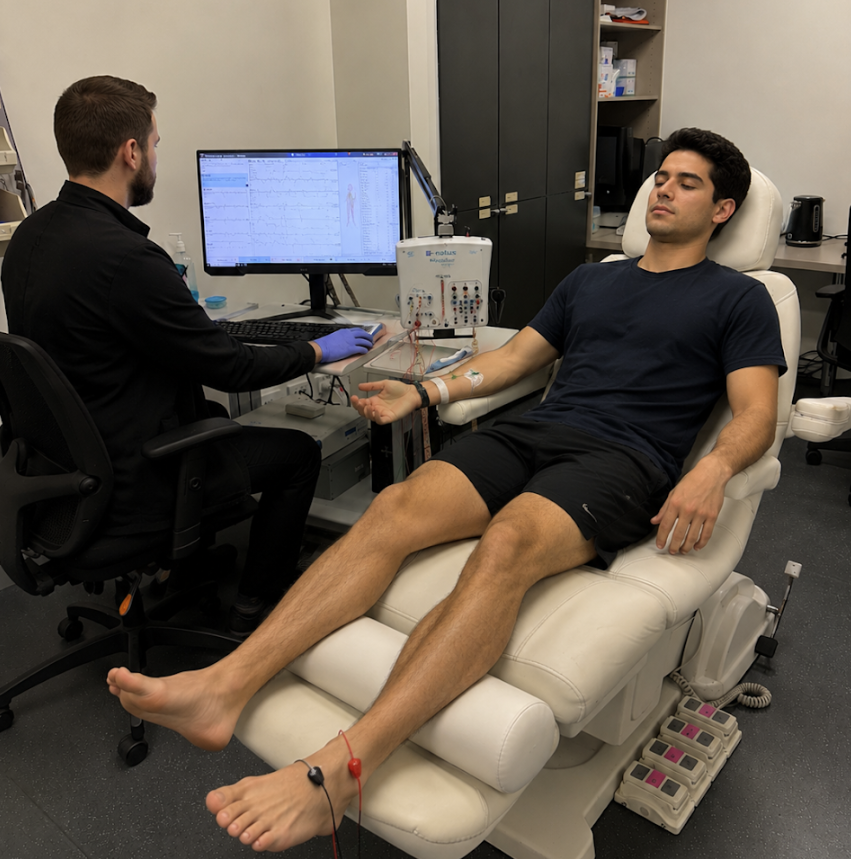
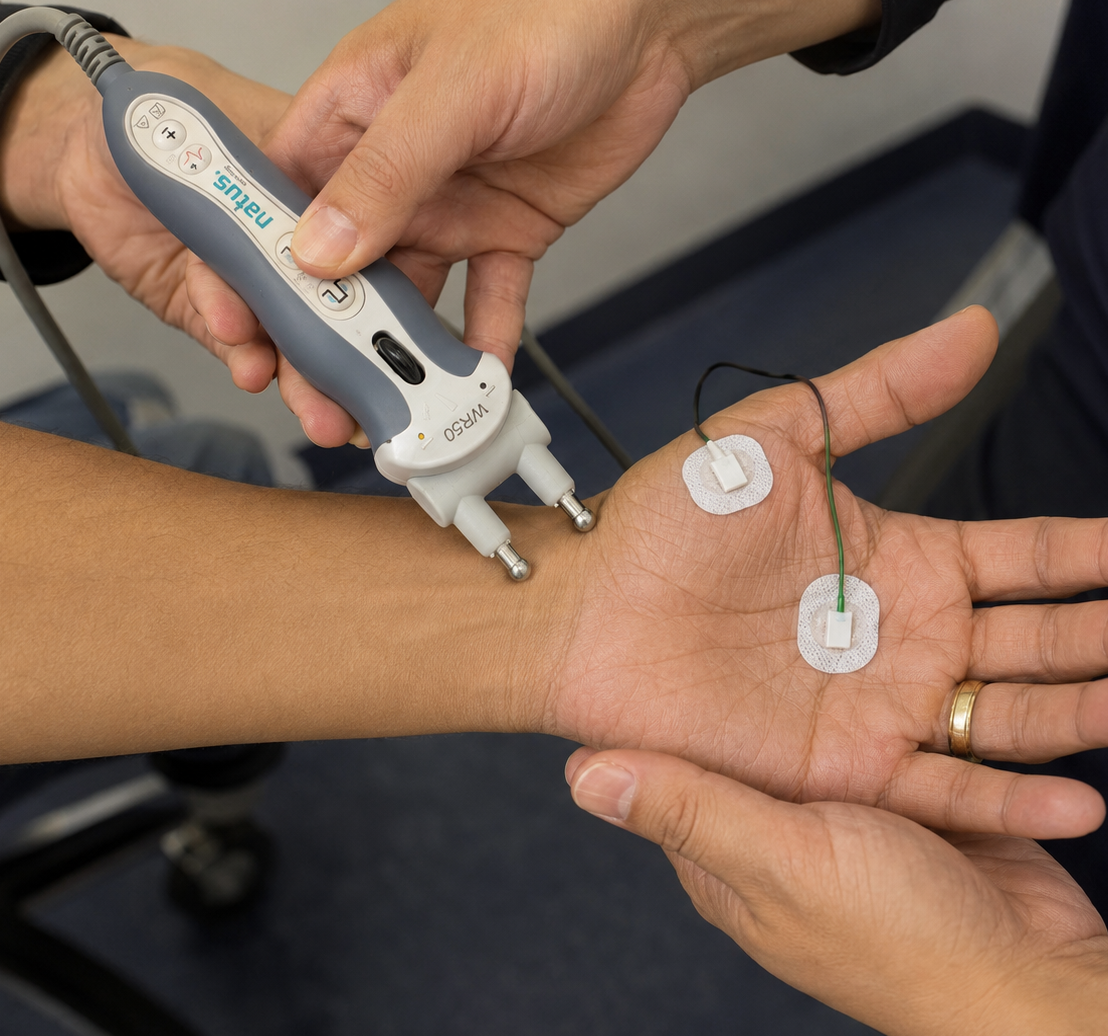
Nerve conduction studies (NCS) examines the peripheral nerves by stimulating the nerves with safe tiny electrical pulses, like that of static shocks and recording the response. It is performed for multiple reasons and so is specific to the clinical presentation and the number of nerves being tested is dependent on this. It is usually performed on the limbs and with some of the study you can see the limb jerk similar to that of a tendon hammer. There is no side effects to the testing except for sweating.
- No cream or oil on limbs or area to be tested.
- Wear loose clothes so that sleeves or trousers can be pulled up above knee or elbow – depending on the required area of examination.
The test should take roughly 1 hour.
Electromyography (EMG)
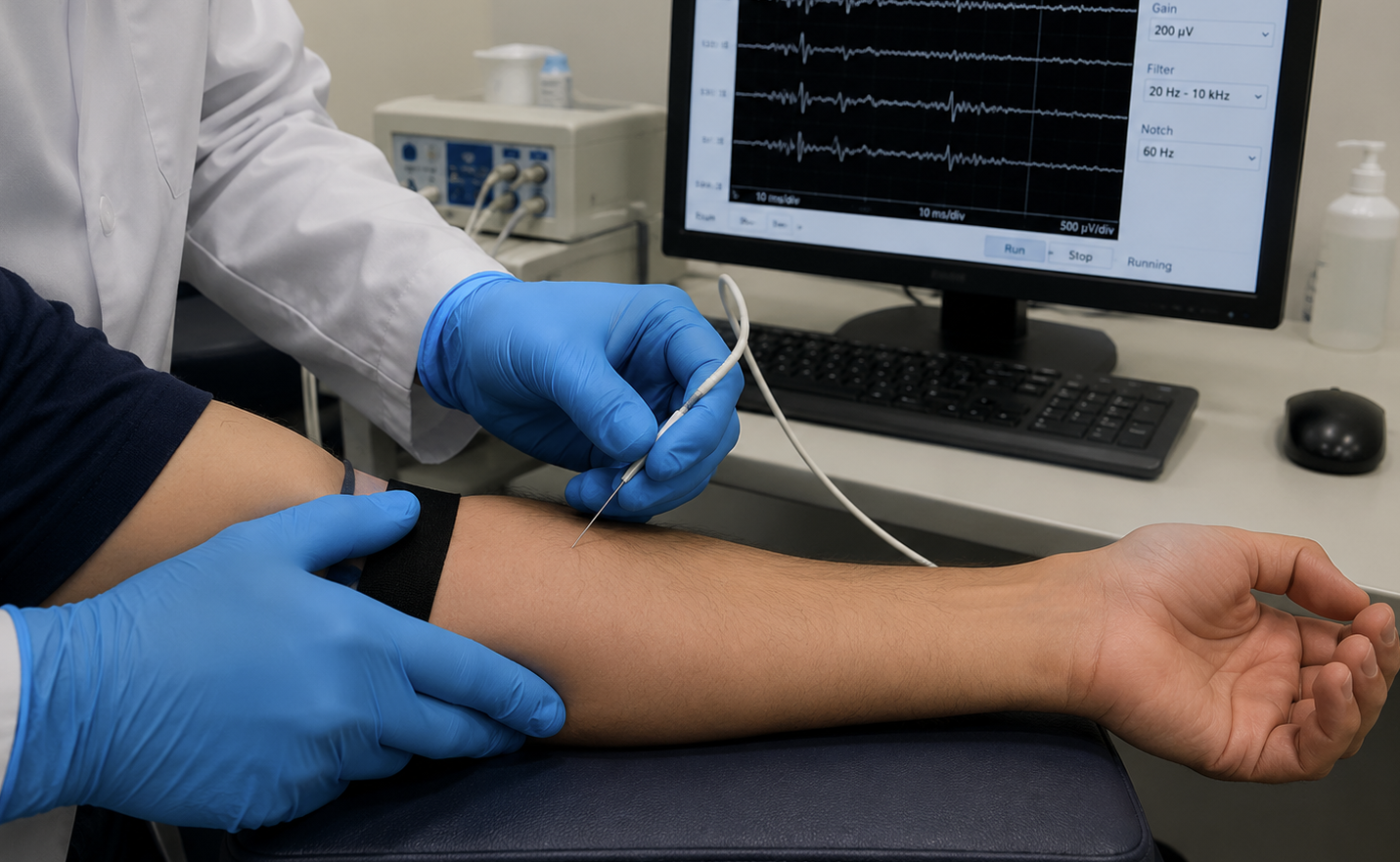
On occasion further information is needed and so the neurologist may perform a Electromyography (EMG) study. EMG examines the muscle activity and the nerve supply to the muscles. The neurologist inserts a tiny recording pin into the muscles and listens to it at both rest and with activation. The neurologist does not draw or inject anything. Again the number of muscles sampled is dependent on the clinical presentation. On the rare occasion a person may receive a bruise from this test.